
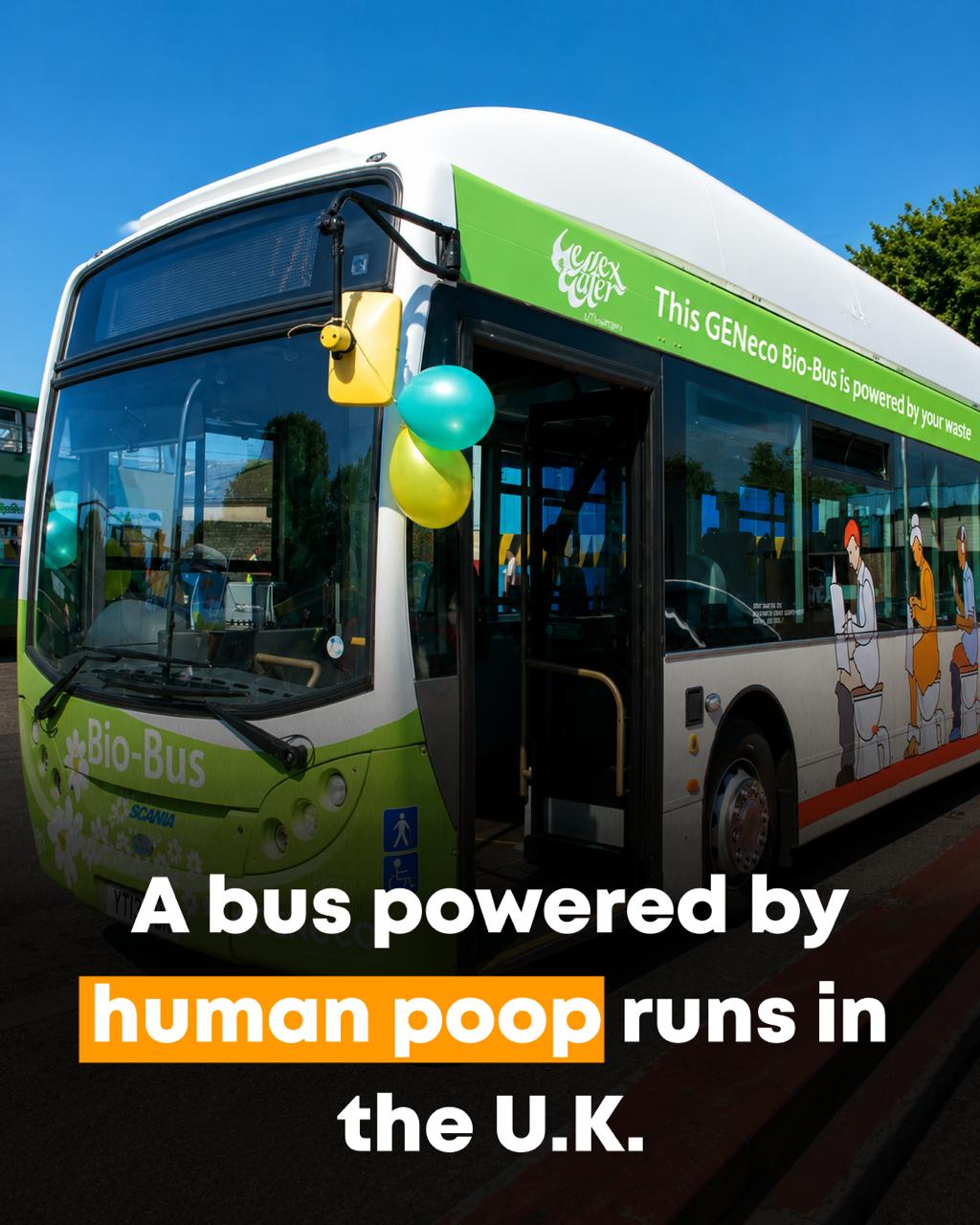
How the U.K.’s “Bio-Bus” Turned Human Waste Into Clean Energy
The idea may sound unbelievable, but the United Kingdom’s innovative “Bio-Bus” proved that human waste and food scraps can be transformed into powerful clean fuel capable of running public transportation for hundreds of kilometers. 🌍🚌
This groundbreaking eco-friendly project demonstrated how renewable energy can reduce pollution while turning everyday waste into something incredibly useful.
What Is the Bio-Bus?
The Bio-Bus was a special bus powered by biomethane gas created from sewage and food waste. Instead of relying on traditional diesel fuel, the bus used renewable gas produced through a process called anaerobic digestion.
In this process, bacteria break down organic waste materials in oxygen-free tanks, creating methane-rich biogas. That gas is then cleaned and converted into fuel strong enough to power vehicles.
The project quickly gained worldwide attention because it showed how cities could recycle waste while reducing carbon emissions at the same time.
Turning Waste Into Energy
One of the most fascinating facts about the Bio-Bus is the amount of waste needed to fuel it. Human sewage and discarded food from households were processed at renewable energy facilities, where they were converted into usable biomethane gas.
According to reports, a full tank of biomethane allowed the bus to travel long distances while producing far fewer greenhouse gas emissions than conventional buses.
The concept highlighted a future where waste is no longer viewed as useless garbage but as a valuable energy resource.
Why the Bio-Bus Matters
The Bio-Bus became a symbol of sustainable innovation and green transportation. Around the world, governments and environmental organizations continue searching for cleaner alternatives to fossil fuels, and projects like this prove that renewable solutions are possible.
Benefits of biomethane-powered transport include:
Lower carbon emissions
Reduced landfill waste
Cleaner air in cities
Renewable fuel production
Improved waste recycling systems
As climate concerns continue growing globally, technologies like the Bio-Bus may become more common in future public transportation systems.
A Glimpse Into the Future
The success of the Bio-Bus inspired discussions about how renewable energy could transform modern cities. From buses and trucks to household heating systems, biomethane fuel offers a cleaner and more sustainable alternative to traditional energy sources.
While the project itself was experimental, it helped raise awareness about innovative environmental technologies and the importance of investing in greener infrastructure.
Final Thoughts
The U.K.’s Bio-Bus showed the world that even human waste and leftover food can become part of the clean energy revolution. By converting organic waste into renewable biomethane fuel, the project demonstrated a creative solution to both pollution and waste management challenges.
It remains one of the most fascinating examples of how science and sustainability can work together to create a cleaner future.
Tags: Bio-Bus, UK Bio-Bus, renewable energy, biomethane fuel, clean transportation, eco friendly bus, green technology, sustainable transport, waste to energy, human waste fuel, biomethane bus, renewable fuel, environmental innovation, green energy project, climate change solutions, eco transport, public transportation, clean fuel technology, food waste recycling, sustainable future
Leave a Comment